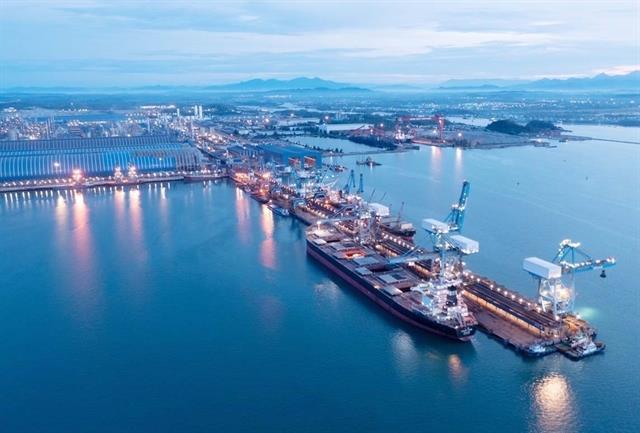


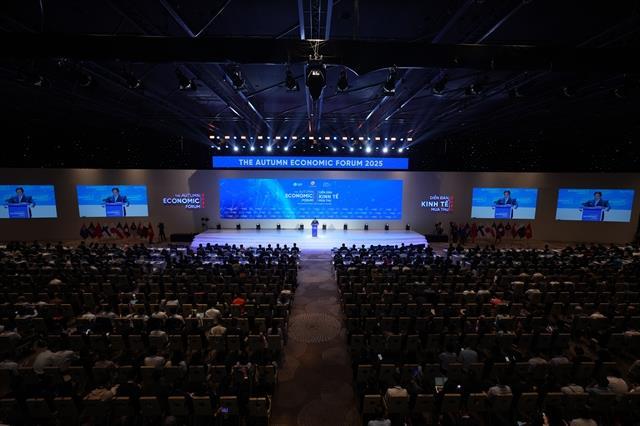
Việt Nam needs breakthrough policy mechanisms beyond tax incentives to accelerate plans for a national refining and energy hub at Dung Quất in the central province of Quảng Ngãi, as the country seeks to strengthen energy security amid global volatility.
Türkiye is one of Việt Nam’s key partners in the region, serving as a strategic bridge between Asia and Europe. Conversely, Việt Nam, with its dynamic and fast-growing economy, is an important gateway for Türkiye to access Southeast Asian and...
HCM City is mobilising resources to build an international financial centre to connect global capital flows, with Slovakia seen as a potential strategic partner.
Expanding air connectivity between Việt Nam and Türkiye is supporting growth in tourism, trade and broader economic ties, as flight frequency increases and travel demand between the two markets continues to rise.
Once operational, the zone is expected to contribute 8-12 per cent of the province’s gross regional domestic product and between 150,000 and 250,000 high-quality jobs.
Vietnamese and Bulgarian businesses are expanding cooperation in innovation, digital transformation and green growth, as a seminar in Sofia highlights new opportunities under the Strategic Partnership and EVFTA framework.
Việt Nam needs to foster a new generation of private enterprises with stronger technological capabilities to lead key industries and shift from supporting growth to driving the country’s modernisation.
The southern province of Tây Ninh has seen notable progress with the development of 51 industrial parks, covering over 15,000 hectares, reaching half of the planned goal by 2030, according to the provincial Economic Zone Authority of Tây Ninh.
Rather than relying heavily on tax incentives, the model emphasises improving the overall investment environment, including transparency, efficiency and regulatory certainty, to enhance long-term competitiveness.
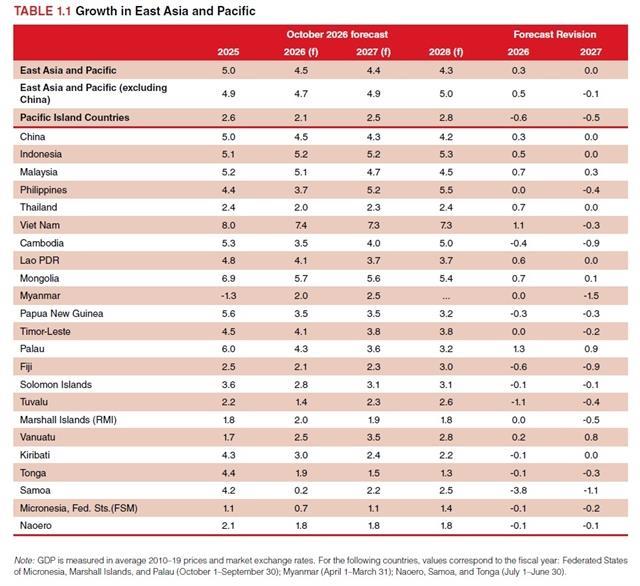
Gross domestic product (GDP) growth is projected to moderate to 7.2 per cent in 2026 and 7.0 per cent in 2027 under the ADB''s baseline scenario, after expanding by 8.0 per cent in 2025.
Urbanisation processes are being reshaped, with focus shifting from simple expansion to integrated urban development linked by modern infrastructure and higher value creation.